Venue types
Party & Private Event Rooms
Planning a birthday, anniversary, baby shower, reunion, graduation party, or other private celebration usually starts with a few practical questions: how many guests you expect, what city and date you need, and whether you want a simple private room or a full party venue. Party and private event rooms can work for small family gatherings or large celebrations, but the real price and setup depend on the date, the city, the guest count, and what is included, so every range below is an example, not a quote.
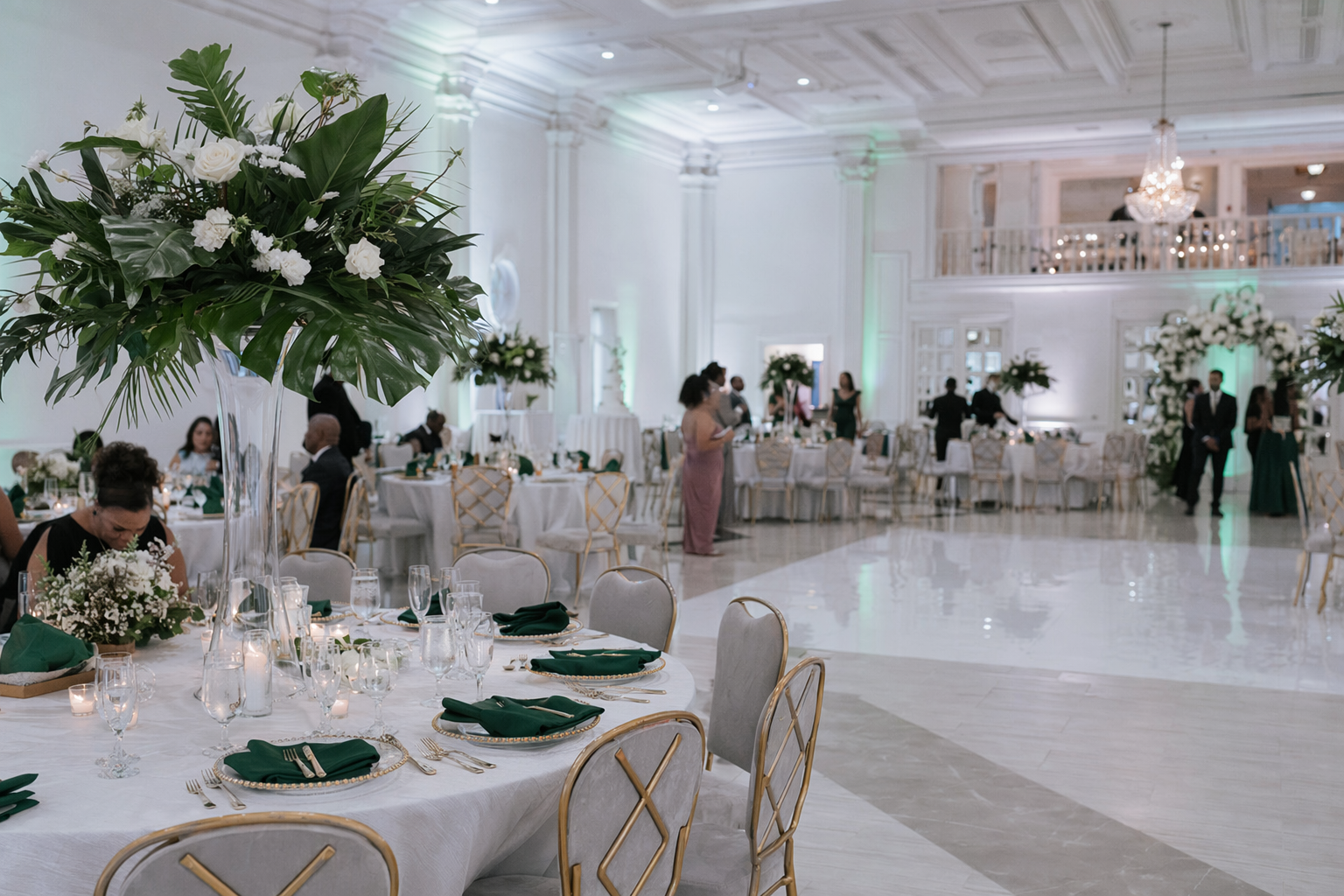
What party and private event rooms are good for
Party and private event rooms are spaces reserved for social gatherings that do not need a full traditional banquet hall. Depending on the venue, that can mean a restaurant private dining room, a hotel event room, a lounge, a community gathering space, a rooftop room, a brewery buyout, or a flexible event space designed for birthdays, showers, reunions, and celebrations of all kinds.
This venue type often fits hosts who want:
- A birthday party, anniversary dinner, retirement party, engagement party, graduation, holiday party, or family reunion.
- A baby shower, bridal shower, welcome party, or rehearsal-related gathering.
- A cultural or religious celebration where food, music, and family seating matter just as much as the room itself.
- A casual corporate social event, team dinner, client reception, or end-of-year gathering.
- A space that feels more personal or easier to manage than a very large ballroom.
These venues can be a strong choice when you want a built-in atmosphere and a simpler planning process. Many already have tables, chairs, staff, restrooms, and food or bar service available. If you are planning from another city or another country, this can make coordination easier because fewer rentals may be needed.
The best fit depends on your event style. Some hosts want a private room inside a restaurant for a seated meal. Others need a flexible room where they can bring a DJ, decorator, dessert table, and program. You will want to compare rules, minimums, and included services before you choose who to book.
Guest count, layouts, and how to choose the right size
Guest count is one of the biggest factors in whether a private room actually works for your event. A room that feels perfect for 35 guests at a dinner can feel crowded at 35 guests with a DJ, gift table, buffet, and stroller parking.
Typical capacities often look like this:
- 10 to 25 guests: private dining rooms, small lounges, chef's rooms, and intimate event spaces.
- 25 to 60 guests: medium private rooms, restaurant buyouts of one section, smaller club rooms, and casual party spaces.
- 60 to 120 guests: larger event rooms, partial venue buyouts, hotel meeting and banquet rooms, and flexible celebration spaces.
- 120+ guests: full buyouts, large banquet-style spaces, or multi-room venues with room for dining and dancing.
Layout matters as much as capacity. Ask the venue what the room holds in the setup you actually want:
- Seated dinner with rounds or long tables.
- Cocktail-style mingling.
- Buffet service.
- Dance floor and DJ.
- Presentation setup with a microphone or screen.
- Kids' tables, dessert stations, gift table, or photo backdrop.
A smart way to compare spaces is to build your must-have floor plan before you tour. Count the practical pieces, not just the guests. For example, if you need 70 guests, a buffet, a cake table, and room for older relatives to move comfortably, a space that technically holds 70 may be too tight.
When you tour, ask to see the room set up for an event close to yours, not just empty. You should also ask whether there are noise limits, end times, elevator access, parking limits, or restrictions on outside vendors. Those details can matter more than decor.
Typical cost ranges and what usually drives the price
Party and private event rooms vary widely in cost. The real number depends on the date, the city, the guest count, and what is included. These ranges are examples, not quotes.
Common pricing structures include a room rental fee, a food-and-beverage minimum, per-person packages, or a full buyout rate.
Example ranges you may see in many U.S. markets:
- Small private room for 15 to 30 guests: about $300 to $1,500 for room rental, or a required food-and-beverage minimum instead of a rental fee.
- Mid-size room for 30 to 75 guests: about $1,000 to $4,000 for the space, sometimes plus food, beverage, staffing, and rentals.
- Larger private event space for 75 to 150 guests: about $3,000 to $10,000+ depending on city, day of week, season, and whether catering is included.
- Restaurant or lounge buyouts: often driven by a minimum spend rather than a simple rental price, and that can range from a few thousand dollars to much more in major cities.
- Per-person food packages: often start around $25 to $60+ per guest for casual events and can go much higher for premium menus, bar packages, or upscale service.
What usually pushes the price up:
- Saturday evenings, holiday weekends, and peak months.
- Major metro areas and in-demand neighborhoods.
- Higher guest counts.
- Longer event windows, early access, or late-night hours.
- Premium catering, full bar service, custom menus, or desserts.
- AV, security, valet, coat check, extra staffing, or cleanup.
- Rentals for linens, chargers, lounge furniture, staging, or dance floors.
Also watch for the fine print:
- Service charges and gratuity policies.
- Food-and-beverage minimums that must be met before tax and fees.
- Deposits and payment schedules.
- Overtime charges if the event runs late.
- Cake-cutting, corkage, or outside dessert fees.
- Cancellation terms and whether payments are refundable.
Before you pay a deposit, ask for the full estimate in writing and compare the total, not just the starting number. If you are building your budget now, how to set an event venue budget is a good place to start.
What is often included, and what may cost extra
Many hosts assume a private event room includes everything needed for a party. Sometimes it does, but often the base package is more limited than it first appears.
Items often included:
- Tables and chairs.
- Basic setup and teardown.
- Standard linens or napkins.
- On-site staff for service.
- Existing restrooms and parking access.
- House sound system or background music.
- Basic glassware, flatware, and dinnerware for catered events.
Items that are commonly extra:
- Custom floorplans or specialty furniture.
- Upgraded linens, chargers, centerpieces, or decor.
- DJ, live music, or amplified sound support.
- AV equipment, projector, screen, microphones, or technician time.
- Security, valet, coat check, or attendants.
- Ceremony setup, if your event includes a formal program.
- Outside catering fees, kitchen use fees, or vendor access fees.
- Bar packages, bartender fees, corkage, or minimum consumption charges.
- Cake service, dessert plating, or refrigeration.
- Extra cleanup for confetti, candles, or specialty installations.
If your event has cultural or religious elements, ask early about accommodations. You may need space for a blessing, a family presentation, prayer timing, a tea or dessert service, separate food handling needs, or room for elders and children to sit comfortably. The right venue will explain what is allowed and what can be arranged.
The goal is not to find a room that looks good online. It is to find a venue that can support your real event plan without expensive surprises.
Key questions to ask before you book
Once you narrow your list, your job as the host is to compare the details carefully. Touring is important, but the written quote and contract matter just as much.
Ask questions like these:
- What is the maximum guest count for my exact layout?
- Is pricing based on room rental, minimum spend, per-person packages, or a full buyout?
- What is included in the price, and what costs extra?
- What are the deposit amount, payment schedule, and cancellation terms?
- Are service charges, taxes, and gratuities already included in the estimate?
- What are the start and end times, and what is the overtime cost?
- Can I bring my own decorator, cake, DJ, photographer, or caterer?
- Are there restrictions on music volume, candles, alcohol, or cultural traditions?
- Is there parking, elevator access, and easy access for older guests or strollers?
- Who will be my point of contact on the event day?
It also helps to ask what events usually go well in that room and what challenges past hosts have run into. A good venue contact should be able to explain the flow of the space honestly.
Before sending money, confirm everything in writing. That includes the room name, date, hours, guest count, minimums, included items, extra fees, and any promises made during the tour.
How free matching works with VenueGather
If you want help finding party and private event rooms near you, VenueGather can help you save time. Matching is free to the host.
Here is how it works:
- Tell us the basics: event type, city or area, date or date range, estimated guest count, and budget range.
- Share the details that matter to your celebration, like food preferences, accessibility needs, private room vs. full venue, or whether you need space for music and dancing.
- We match you with venues that may fit your event details.
- You review your options, tour, compare prices and policies, and choose who you want to contact or book.
VenueGather is not a venue, caterer, or event operator, and we do not guarantee price or availability. Each venue sets its own pricing, rules, and open dates. You should always confirm the final details directly with the venue in writing before paying a deposit.
If you are ready to start, get matched and tell us what kind of party space you need. Help is available in your own language, and you can plan whether you are local or organizing the event from another city or country.
Choose a party room based on your real guest count, layout, budget, and must-haves, then compare total written costs and policies before you book, and use free matching if you want help finding options near you.
Common questions
What is the difference between a party venue and a private event room?
A private event room is usually a reserved room inside a larger business, such as a restaurant, hotel, club, or lounge. A party venue can mean a dedicated event space or a full-property buyout. Private rooms often work well for smaller or medium gatherings, while larger party venues may offer more flexibility for dancing, decor, and multi-part events.
How much does a private party room usually cost?
It varies by date, city, guest count, and what is included. In many markets, small private rooms may start around $300 to $1,500, while larger spaces can run from $3,000 to $10,000 or more. Some venues charge a room fee, and others require a food-and-beverage minimum instead. These are examples, not quotes.
Do party rooms usually include food and drinks?
Sometimes, but not always. Restaurant private rooms often center around food-and-beverage packages or minimum spends. Other event spaces may be room-rental only and let you bring catering or choose from a preferred vendor list. Always ask what is included and what fees apply for outside food, dessert, or alcohol service.
What size party room do I need for my event?
Start with your guest count, then add the space needed for your setup. A dinner for 30 may fit comfortably in one room, but a 30-person event with a buffet, DJ, gifts, and kids' seating may need more space. Ask for the capacity for your exact layout, not just the maximum standing capacity.
Can I bring my own decorator, DJ, or cake?
Many venues allow some outside vendors, but rules vary. Some have preferred vendor lists. Others charge fees for outside cakes, corkage, extra cleanup, or vendor access. Ask these questions before you book so you can compare the full cost fairly.
How does VenueGather matching work?
You share your event details, such as location, date, guest count, budget range, and event style. VenueGather then helps match you with venues that may fit. Matching is free to the host. You still tour, compare, choose who to book, and confirm all pricing, availability, and contract terms directly with the venue.