Planning guides
How to match guest count to venue capacity
The number on a venue brochure is not always the number that works for your event. To choose the right room, you need to compare your guest count to the real setup you want, including seating style, dance floor, stage, buffet, ceremony space, and vendor equipment.
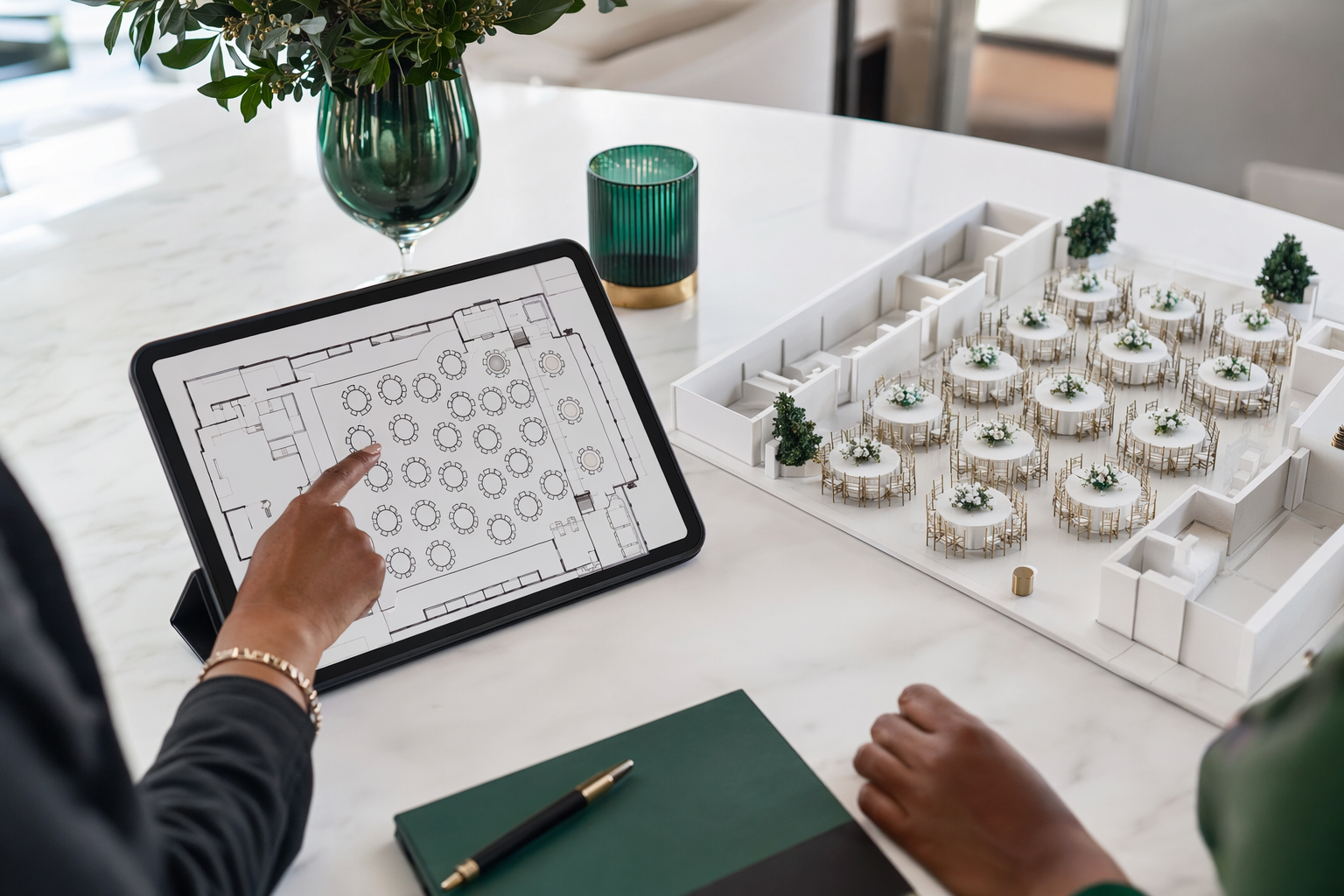
Start with your real guest count, not your invite list
Before you tour venues, build three numbers:
- Invited guests. Everyone who may receive an invitation.
- Expected guests. The number you realistically think will attend.
- Must-fit number. The highest attendance you need the room to handle comfortably.
For example, if you invite 180 people, expect 140 to 155, and want a little safety margin, your must-fit number may be 160.
This matters because venues may quote capacity in different ways. One ballroom may say 200 guests, but that could mean:
- 200 standing, no formal dinner
- 200 theater-style chairs, tightly spaced
- 160 banquet-style with round tables
- 120 with a dance floor, sweetheart table, DJ, and buffet
If you are still estimating attendance, ask venues for layouts at three guest counts, such as 120, 150, and 180. That gives you a more honest picture than asking, "How many people fit?"
If you need help building a realistic budget around your attendance, read how to set an event venue budget.
Know the difference between fire-code capacity and usable event capacity
A venue's fire-code maximum is a safety limit, not a comfort recommendation. It does not automatically mean the room will feel good for your wedding, quinceañera, corporate event, birthday, baby shower, graduation, holiday party, or cultural or religious celebration.
The usable capacity is usually lower because your event needs space for more than bodies in a room.
Common space users include:
- Round or rectangular guest tables
- Dance floor
- Head table or sweetheart table
- Cake or dessert table
- Gift table or sign-in table
- Buffet lines or food stations
- Bar setup
- DJ booth or band area
- Stage, podium, or presentation screen
- Photo booth
- Ceremony chairs in the same room as dinner
- Space for strollers, wheelchairs, elders, and easy walking paths
A useful rule is to treat the listed maximum as a starting point, then ask, "What is the comfortable capacity for my exact floor plan?"
Ask every venue:
- Is the posted capacity standing, seated, or banquet-style?
- What table size is assumed in that number?
- Does that count include a dance floor?
- Does it include buffet tables, a bar, or a stage?
- Can I see sample floor plans for my event type?
- How many guests fit comfortably, not just legally?
You can also compare options by using a free matching service like VenueGather. Matching is free to the host, and you still tour, compare, and choose who to book. Real pricing and availability depend on the date, city, guest count, and what is included.
Use the right capacity style for your event setup
Capacity changes a lot depending on how guests will be seated or moving through the room.
Here are common setup types and what they usually mean:
- Standing reception or cocktail event: Highest capacity, because there are fewer tables and chairs.
- Theater style: Rows of chairs facing a stage or ceremony area. Often fits more people than banquet seating.
- Classroom style: Tables with chairs facing the front. Common for trainings and meetings, and lower capacity than theater style.
- Banquet with round tables: Common for weddings, quinceañeras, galas, and family celebrations. Usually takes more space per guest.
- Banquet with rectangular tables: Can sometimes fit a room more efficiently, depending on the layout.
- Ceremony plus reception in one room: Often reduces capacity because the room has to serve two purposes, or staff must flip the room during cocktail hour.
Practical examples for one room might look like this:
- 220 standing reception
- 180 theater style
- 150 banquet seating
- 130 banquet seating with dance floor and DJ
- 110 banquet seating with dance floor, stage, buffet, and photo booth
These are examples, not quotes. The real number depends on the room size, ceiling columns, exits, table sizes, venue rules, and what else needs to fit.
If your event includes formal dances, live music, a ceremony arch, cultural performances, or a large dessert display, say that early. A room that fits your dinner may not fit your full program.
Plan space for the extras that reduce capacity
Many hosts underestimate how much room the "extras" need. That is where capacity mistakes happen.
Here is a practical checklist of items that often reduce guest count:
- Dance floor. A small dance floor may work for light dancing, but larger weddings and quinceañeras often need more room.
- Band or DJ area. A live band usually needs more space than a DJ.
- Stage. Important for speeches, performances, religious elements, or presentations.
- Buffet or food stations. Multiple stations improve flow, but they use floor space.
- Bar lines. A busy bar with little room around it creates crowding.
- Sweetheart table or head table. This can take more space than hosts expect.
- Cake, candy, or dessert displays. Especially common at quinceañeras, weddings, and milestone parties.
- Photo booth or backdrop. Fun, but it needs line space too.
- Kids' area, lounge furniture, or vendor tables. Nice additions that reduce seating area.
- Ceremony in the same room. If chairs stay in place or the room must be turned over, capacity and timing both change.
Ask the venue coordinator or sales manager to mark these on a sample floor plan. If they cannot show where each item goes, the capacity number may be too optimistic.
A good host question is: "Can you send me a floor plan that shows all tables, chairs, dance floor, entertainment, buffet, and walking paths for 150 guests?"
You should also ask who provides each item and whether there are added fees for setup changes, room flips, overtime, or upgraded furniture. Confirm all details in writing before you pay a deposit.
Choose a room that feels comfortable, not crowded or empty
The best capacity match is not always the biggest room you can afford. You want a space that fits your attendance and feels right once the event begins.
If the room is too full, guests may deal with:
- Tight aisles
- Long buffet and bar lines
- Limited dance space
- Hard-to-reach tables
- Noise and heat buildup
- Less comfort for elders, children, and guests using mobility devices
If the room is too large, you may notice:
- A sparse look in photos
- Weak energy on the dance floor
- More money spent on decor to fill the space
- Guests spread too far apart
A practical target is to look for a room where your expected guest count fits well, but the room can still handle a modest increase. For example:
- Expecting 110 guests. A room that works best at 100 to 130 may feel right.
- Expecting 180 guests. A room that only works up to 180 banquet-style may feel tight if your final count rises.
When you tour, do not just ask for square footage. Ask to see:
- Floor plans at your guest count
- Photos or videos from events with similar attendance
- Table spacing and aisle width in real setups
- Where entertainment and food service actually go
If you are planning from another city or another country, ask for a video walkthrough and a marked floor plan. That helps you compare spaces before you travel.
Ask these capacity questions before you book
Use this checklist when comparing venues:
- What is the capacity for my exact setup?
- Is that number for seated, standing, theater, or banquet style?
- Does the layout include a dance floor, stage, DJ or band, buffet, bar, and dessert table?
- What happens if my final guest count is 10 to 20 people higher than expected?
- Can the room be reconfigured with rectangular tables instead of rounds?
- Are there pillars, low ceilings, or odd corners that affect views or table placement?
- Are there separate spaces for cocktail hour, ceremony, or kids' activities?
- Is there enough room for wheelchair access, strollers, and elders who need easier movement?
- How many restrooms and parking spaces are available for this guest count?
- Are there overtime fees if the room flip or service takes longer than planned?
- What deposit, cancellation, and payment terms apply?
- Is there a food-and-beverage minimum or service charge that changes with guest count?
Cost ranges vary widely by city, date, guest count, and what is included. As a broad example, a private-event venue rental might range from about $1,500 to $15,000+, and all-inclusive packages can be much higher once food, staffing, rentals, and service charges are added. These are examples, not quotes. You should always confirm the full proposal in writing.
To compare options near you, you can get matched for free. You share contact and event details, not financial account numbers or sensitive records. Then you tour, compare, and decide what to book.
For more planning help, see questions to ask a wedding venue before you book and how to estimate event guest count.
Choose a venue based on the guest count and setup you actually need, not just the biggest number on the listing.
Common questions
How many extra seats should I plan for beyond my RSVP count?
A small cushion can help, especially if your guest count is still moving. Many hosts want room for a few unexpected attendees, vendor meals, or last-minute changes. The exact number depends on your event type and family or community expectations, but you should ask the venue what happens if your final count increases shortly before the event.
Can a venue hold more people for a standing event than a seated dinner?
Yes. Standing receptions usually fit more people because they use fewer tables and chairs. A room that works for 200 standing guests may only work for 120 to 160 guests for a seated banquet once you add tables, aisles, food service, and entertainment.
Do I need a bigger room if I want a dance floor?
Usually, yes. A dance floor takes away space that might otherwise be used for guest tables. If you are planning a wedding, quinceañera, sweet 16, holiday party, or any event where dancing is central, ask the venue to show a floor plan with the dance floor drawn to scale.
Is the venue's posted capacity enough information to book?
No. You need to know what kind of setup that number assumes and what is included in the layout. A posted capacity may not account for your buffet, stage, ceremony area, lounge furniture, or accessibility needs. Always ask for a sample floor plan for your guest count and event style.
What if my guest count changes after I book?
Ask about this before signing. Some venues can adjust table layouts up to a point, while others have strict limits. You should confirm deadlines for final guest count, minimum spend requirements, overtime, deposits, and cancellation terms in writing before paying.