Planning guides
Indoor vs. outdoor venues
Choosing between an indoor and outdoor venue usually comes down to four things: your guest count, your budget, your date, and how much weather risk you are willing to manage. The best option depends on the city, the season, the time of day, and what is included, so treat every cost range here as an example, not a quote.
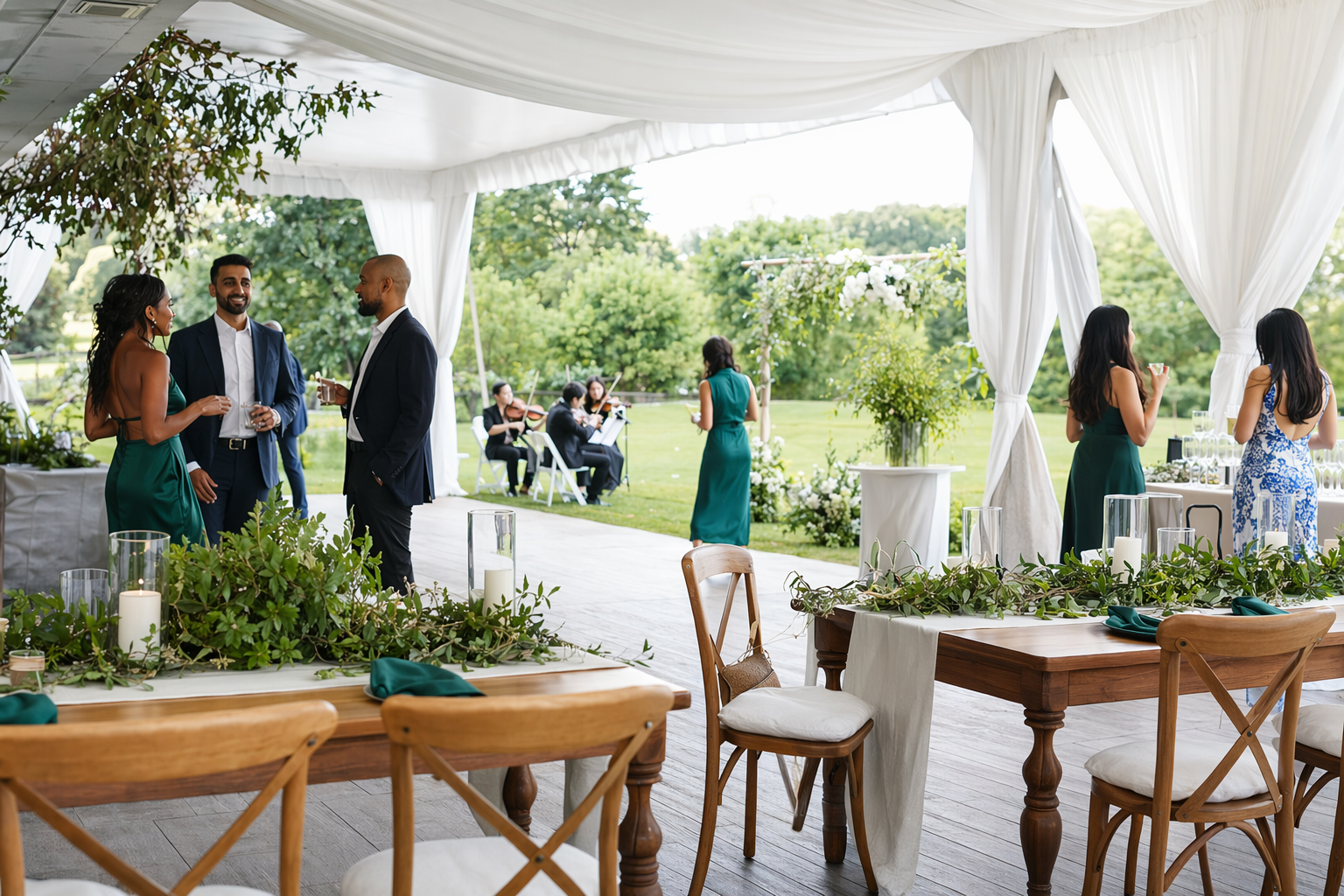
Start with the decision that matters most: comfort, risk, or atmosphere
Some hosts fall in love with a view. Others care more about air conditioning, easy parking, or keeping older guests comfortable. Before you tour venues, decide which of these matters most for your event.
Indoor venues usually make more sense if:
- You need predictable temperature control.
- You are planning during very hot, cold, rainy, windy, or hurricane-prone months.
- You have many children, older adults, or guests with mobility needs.
- Your event includes formal dining, religious rituals, AV, presentations, dancing, or a late end time.
- You do not want to build a backup plan from scratch.
Outdoor venues usually make more sense if:
- The setting is part of the experience, like a garden, waterfront, vineyard, ranch, rooftop, or mountain view.
- Your date is in a milder season and your city has lower weather risk.
- You want a more open layout for photos, cocktail hour, or cultural traditions that benefit from outdoor space.
- You are comfortable planning for shade, heating, restrooms, power, insects, and a weather backup.
For many events, the best answer is actually a hybrid venue with both indoor and outdoor space. That gives you flexibility for ceremonies, cocktail hour, and photos while keeping a real rain plan in place.
If you are comparing multiple options, make a simple list with these columns: guest count, base rental, what's included, weather backup, parking, noise rules, and end time. That one-page comparison often makes the decision much easier.
Compare the real costs, not just the rental fee
Outdoor venues can look cheaper at first because the base rental may be lower. Indoor venues can look more expensive because more is included. The real number depends on the date, the city, the guest count, and what is included.
Example cost ranges for venue rental only, before food, drink, and added services:
- Small indoor private room or restaurant buyout area: $1,500 to $6,000
- Ballroom, banquet hall, loft, or hotel indoor venue: $4,000 to $15,000+
- Garden, courtyard, rooftop, ranch, or other outdoor-focused venue: $3,000 to $12,000+
- Premium properties with both indoor and outdoor access: $6,000 to $20,000+
Common outdoor add-ons hosts forget to budget for:
- Tent: $2,000 to $10,000+ depending on size, flooring, and sidewalls
- Fans, misters, heaters, or climate equipment: $300 to $3,000+
- Restroom trailers if needed: $1,000 to $4,000+
- Generator and extra power: $500 to $2,500+
- Lighting for walkways, dinner, and parking: $500 to $3,000+
- Pest control or treatment: $100 to $500+
- Additional staffing for setup, breakdown, parking, or guest guidance
Common indoor costs hosts should still ask about:
- Food-and-beverage minimums
- Service charges and taxes
- Ceremony fee if using a second room
- Overtime fees if the event runs late
- AV package, projector, microphones, and sound technician
- Security, coat check, valet, or cleaning fees
A venue with a higher rental fee can still be the better value if it includes tables, chairs, linens, built-in lighting, restrooms, kitchen access, parking, and an on-site backup room. Before you compare prices, ask each venue for an itemized estimate and confirm what is included in writing. For help building your full spending plan, see how to set an event venue budget.
Think through weather, season, and the backup plan before you fall in love
Weather is the biggest difference between indoor and outdoor venues. A beautiful outdoor space can be perfect in one season and stressful in another.
Ask these weather questions on every tour:
1. What is the rain plan, and is it included in the price?
2. When do we have to decide to move indoors?
3. If we rent a tent, who installs it and when is the cutoff date?
4. Is there shade for daytime events?
5. Is there heat or cooling for guests, vendors, and older family members?
6. What happens in high wind, lightning, wildfire smoke, or extreme heat?
7. Will the venue refund anything if weather changes the plan? If not, what is still owed?
Practical examples by season:
- In hot summer cities, an outdoor ceremony at 3 p.m. can be much harder on guests than one at 6:30 p.m.
- In colder regions, spring and fall can still require heaters, enclosed tents, or a full indoor backup.
- In coastal or tropical areas, humidity, storms, and wind can change logistics quickly.
- In dry climates, sun exposure and dust may matter more than rain.
If you are planning from another city or country, ask the venue what local weather pattern hosts most often underestimate. That one question can save you from expensive last-minute changes.
A real backup plan is not just "we'll decide later." It should name the exact indoor room or covered area, the setup time, the seating capacity, and any extra cost.
Match the venue type to your guests and event format
The right venue is not only about style. It has to work for the way your event will actually move from arrival to meal service to photos to dancing or presentations.
Indoor venues are often better for:
- Weddings with plated dinner, dancing, and a late reception
- Quinceañeras with grand entrance, formal program, and DJ lighting
- Corporate events with presentations, screens, microphones, and networking
- Religious or cultural celebrations that require privacy, sound control, or a specific room setup
- Events where guests will dress formally and stay for several hours
Outdoor venues are often better for:
- Daytime parties, garden events, cultural festivals, and casual celebrations
- Cocktail-style events where guests can move around easily
- Photo-forward events where scenery matters
- Family gatherings with children who benefit from open space
Guest comfort checklist:
- Are restrooms close, clean, and easy to access?
- Is there enough shade or indoor cooling?
- Is parking close to the event space?
- Are pathways paved, lit, and wheelchair accessible?
- Will amplified music, traffic, planes, or neighborhood noise interrupt the event?
- Is there a quiet indoor area for elders, nursing parents, prayer, or children who need a break?
If you are hosting a multicultural or religious celebration, confirm whether the venue allows your traditions, musicians, ceremonial items, catering style, and event timeline. Some spaces are flexible. Others have strict rules on candles, open flame, outside food, sound levels, or end times.
Tour venues with a side-by-side checklist
A venue tour is where indoor and outdoor differences become real. Bring your guest count range, target budget, ideal schedule, and a short list of non-negotiables.
What to compare on every tour:
- Capacity for seated dinner, ceremony, cocktail hour, and dancing
- Included rentals: tables, chairs, linens, bars, staging, lighting
- Backup space and weather procedures
- Setup and breakdown window
- Vendor access, loading area, and power availability
- Restrooms, parking, elevators, and accessibility
- Noise restrictions and final end time
- Security, insurance requirements, and staffing rules
- Deposit amount, payment schedule, cancellation terms, and overtime cost
Questions that help hosts avoid surprises:
1. What is the total estimate with all mandatory fees?
2. What is not included that most hosts end up renting?
3. Can we bring our own caterer, decorator, DJ, or cultural specialists?
4. Are there minimum guest counts or food-and-beverage minimums?
5. Is there a separate fee for ceremony, rehearsal, or early access?
6. How many events happen here on the same day?
7. Who is our main contact, and when will they be available?
Take photos of the ceremony spot, the meal area, the bathrooms, the parking situation, and the backup space. Later, those practical photos are often more useful than the beauty shots.
If you want a shortlist to tour, get matched with venues near your city. Matching is free to the host, and help is available in your own language.
How to choose: a simple 5-step method for indoor vs. outdoor
If you are stuck between two good options, use this method.
- Set your non-negotiables. Write down your guest count, budget ceiling, city, date range, accessibility needs, and event type.
- Price the full plan. Add rental, service charges, rentals, weather backup, parking, staffing, AV, and overtime risk. Do not compare base rental only.
- Score guest comfort. Give each venue a score from 1 to 5 for temperature control, restroom access, parking, shade, noise, and mobility access.
- Review the rain plan. If the outdoor option does not have a clear backup with enough capacity, treat that as a major risk.
- Confirm everything in writing before you pay a deposit. That includes the room or area you are booking, hours, fees, included items, backup plan, cancellation terms, and any promises made on the tour.
A good rule of thumb: if your event depends heavily on schedule, formal meal service, presentations, or guest comfort across many age groups, indoor usually wins on ease. If the setting is central to the experience and the venue offers a true backup plan, outdoor or hybrid can be worth the extra planning.
For more on comparing spaces, read questions to ask before booking a venue and how far in advance to book an event venue.
Choose the venue type that fits your guests, weather risk, and full budget, not just the one with the prettiest photos or the lowest starting price.
Common questions
Is an outdoor venue always cheaper than an indoor venue?
No. Outdoor venues can have lower base rental fees, but many hosts spend more after adding a tent, lighting, restrooms, power, heating or cooling, and a weather backup. The real cost depends on the date, the city, the guest count, and what is included. Ranges are examples, not quotes.
What is the biggest risk of booking an outdoor venue?
Weather is the biggest risk, but it is not the only one. Heat, wind, humidity, insects, noise, uneven ground, and limited restrooms can all affect guest comfort. Ask for the exact rain plan and confirm it in writing before you book.
Are hybrid venues better than fully indoor or fully outdoor spaces?
For many hosts, yes. A venue with both indoor and outdoor space can give you scenic photos and open-air time without forcing you to gamble on the weather. It is often a strong choice for weddings, quinceañeras, corporate events, and cultural celebrations with multiple parts to the day.
How much should I budget for an outdoor backup plan?
It varies widely. A simple covered option already included at the venue may cost nothing extra, while a tented backup with flooring, sidewalls, and climate control can add several thousand dollars. Ask whether the backup is already on-site, whether it fits your full guest count, and when you must make the weather call.
What should I confirm in writing before paying a deposit?
Confirm the date, the exact spaces you are booking, start and end times, guest count limits, all required fees, what is included, the rain plan, overtime rules, cancellation terms, and any vendor restrictions. You should tour, compare, choose who to book, and confirm details in writing before sending money.