Planning guides
Banquet hall vs. restaurant event room
Choosing between a banquet hall and a restaurant event room usually comes down to your guest count, your food priorities, your budget, and how much control you want over the setup. Both can work well for weddings, quinceañeras, birthday parties, corporate events, and cultural or religious celebrations, but the best fit depends on the date, the city, the number of guests, and what is included, so any price range you see is only an example, not a quote.
How the two spaces usually differ
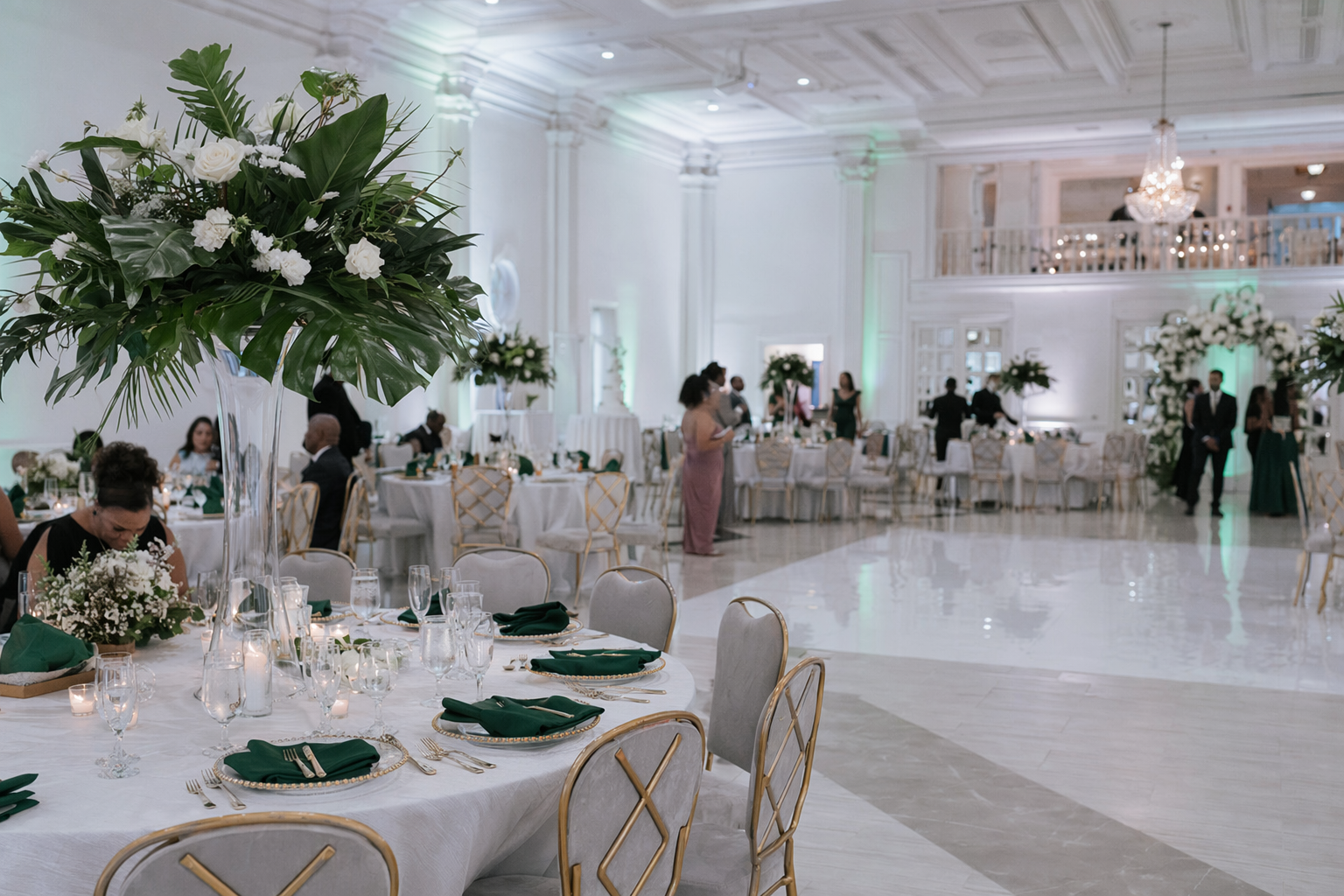
A banquet hall is built for private events first. It often gives you a larger room, more flexibility with layout, a dance floor, and space for formal traditions like speeches, ceremonies, live music, or a grand entrance. This can be a strong fit if you need room for 80, 150, or 300 guests and want the event to feel separate from regular public traffic.
A restaurant event room is usually part of an operating restaurant. It may be a private dining room, a semi-private section, or a full buyout. The biggest draw is often the food and service style. If your event is more centered on a great meal, a polished atmosphere, and a simpler setup, a restaurant can be the easier choice.
In practical terms, banquet halls often win on space and customization. Restaurant event rooms often win on built-in dining experience and convenience.
Ask yourself:
- Do you need room for dancing, entertainment, a stage, or cultural traditions?
- Do you want guests focused on a multi-course meal?
- Will children, older relatives, or out-of-town guests need a quieter, more accessible layout?
- Do you want a venue that feels fully private, or are you comfortable being inside a restaurant setting?
Cost: where banquet halls and restaurant rooms can surprise you
Cost is one of the biggest decision points, and the real number depends on your date, city, guest count, and what is included. These ranges are examples, not quotes.
A banquet hall may charge in one of several ways:
- A room rental fee
- A per-person package for food and beverage
- A food-and-beverage minimum
- Separate charges for tables, chairs, linens, staffing, security, or cleanup
A restaurant event room often prices around:
- A food-and-beverage minimum
- A per-person menu package
- A private room fee or full-buyout fee
- Beverage packages, corkage, cake cutting, or service charges
Example ranges for many U.S. markets:
- Small restaurant private room for 20 to 40 guests: about $800 to $4,000 total
- Mid-size restaurant event for 40 to 80 guests: about $2,500 to $8,000+ total
- Banquet hall for 75 to 150 guests: about $4,000 to $15,000+ total
- Larger banquet hall event with catering, staffing, and rentals: about $10,000 to $30,000+ total
Those numbers can move up quickly for Saturday evenings, holiday weekends, premium menus, open bar service, high-cost cities, or long event blocks.
The fine print matters as much as the starting price. Compare:
- Service charges and gratuity policies
- Deposits and payment schedule
- Minimums you must meet even if fewer guests attend
- Overtime fees if your event runs late
- Vendor rules, including outside catering, DJ, decorator, or cake policies
- Cancellation and change policies
A restaurant can look less expensive at first because much is already in place. A banquet hall can look affordable until you add catering, rentals, staffing, and decor. On the other hand, if you need a larger event with entertainment and traditions, the banquet hall may offer better value for the format you actually want.
If you are building a realistic budget, start with how to set an event venue budget.
Comfort and guest experience
The guest experience feels different in each type of venue.
A banquet hall usually gives you more room to spread out. Guests may have easier circulation between dining, dancing, greeting family, gift tables, or photo areas. This can matter for quinceañeras, weddings, retirement parties, faith-based celebrations, and multigenerational events where people interact in different ways throughout the night.
A restaurant event room often feels more intimate and food-forward. The lighting, table service, kitchen quality, and ambiance may already be strong without much extra decorating. This can be ideal for rehearsal dinners, business dinners, anniversary parties, birthdays, engagement celebrations, and smaller cultural gatherings where conversation and dining are the focus.
Comfort questions to ask on the tour:
- Is the room truly private, or will there be noise from the main restaurant?
- Is there enough space for your actual seating plan, not just the maximum listed capacity?
- Can older relatives, children, and guests with mobility needs move comfortably?
- Are restrooms close and easy to access?
- Is parking simple, valet available, or public transit nearby?
- If your celebration includes music, prayer, speeches, or special traditions, will the room support that comfortably?
For some hosts, the deciding factor is emotional, not just financial. A banquet hall often feels like a full event. A restaurant room often feels like a memorable meal with private celebration space. Neither is better in every case. It depends on what kind of experience you want your guests to remember.
Control, flexibility, and logistics
If you want to shape many details yourself, a banquet hall usually gives you more control. If you want fewer moving parts, a restaurant event room may feel easier.
Banquet hall advantages:
- More freedom with floor plan and timing
- Better fit for DJs, dancing, performances, and formal programs
- More likely to allow custom decor or cultural setup needs
- Sometimes easier to bring in outside vendors, depending on policy
Restaurant event room advantages:
- In-house food, tables, chairs, and service are often already handled
- Less coordination for staffing and rentals
- Menu tastings and event flow may be simpler
- Setup can be faster for hosts planning from another city or country
Trade-offs to watch closely:
- Some banquet halls have preferred or required caterers
- Some restaurants limit amplified music, decorations, outside desserts, or event length
- A restaurant buyout may cost more than expected during peak dining hours
- A hall may require more planning work from you, even if the room itself is ideal
Before you book, confirm everything in writing:
1. The exact room or space you are reserving
2. Start and end time, including setup and cleanup
3. Guest minimum and maximum
4. What furniture, linens, staffing, and food service are included
5. What extra fees apply
6. Whether your date is actually held, and until when
You are the host, so it helps to tour, compare options side by side, and get all details in writing before paying a deposit.
Which option fits best for your event
A banquet hall is often the better fit if you:
- Expect a larger guest count
- Want dancing, entertainment, or a formal program
- Need room for cultural or religious traditions
- Want stronger separation from the public
- Need a blanker canvas for decor and layout
A restaurant event room is often the better fit if you:
- Have a smaller or mid-size guest list
- Care most about the food experience
- Want planning to feel simpler
- Prefer a built-in atmosphere with less decorating
- Are hosting a dinner-centered event rather than a dance-centered one
If you are undecided, compare both options using the same checklist:
- Total estimated cost, including fees
- Privacy level
- Food quality and menu flexibility
- Layout for your real guest count
- Parking and accessibility
- Time limits and noise limits
- Policies on outside vendors and traditions important to your family or community
VenueGather can help you compare venues near you for free. Share your event details, and you can get matched with options that fit your city, guest count, and event type, with help available in your language. Start here: get matched.
Choose a banquet hall for more space and flexibility, or a restaurant event room for a simpler, meal-focused event, then compare the full cost and rules in writing before you book.
Common questions
Is a banquet hall always more expensive than a restaurant event room?
No. Sometimes a restaurant room is less expensive because food, service, and ambiance are already built in. In other cases, a full restaurant buyout or high food-and-beverage minimum can cost as much as, or more than, a hall. The real number depends on the date, city, guest count, and what is included, so ranges are examples, not quotes.
Which is better for a wedding or quinceañera?
It depends on the size and format of the celebration. A banquet hall is often better for dancing, entertainment, formal entrances, and larger family guest lists. A restaurant event room can work well for smaller weddings, rehearsal dinners, engagement parties, or intimate quinceañera celebrations centered on a meal.
Can I bring my own caterer or decorator?
Sometimes, but policies vary a lot. Banquet halls may allow outside vendors, require preferred vendors, or charge extra for outside catering. Restaurants are more likely to require in-house food and may limit decor, entertainment, or outside desserts. Always confirm vendor rules, setup limits, and any related fees in writing.
What should I compare before paying a deposit?
Compare the full estimated total, not just the starting price. Ask about service charges, gratuity, deposits, minimums, overtime, cancellation terms, setup and cleanup time, privacy level, noise limits, included furniture and linens, parking, accessibility, and whether your date is actually being held. Tour the space if you can, compare more than one option, and confirm everything in writing before you book.