Venue types
Banquet Halls
Need a space that can handle a big guest list, a full meal, and a real celebration timeline? Banquet halls are a practical option for weddings, quinceañeras, galas, company parties, and cultural or religious events when you want one room or a connected set of rooms built for dining, dancing, and hosting a crowd.
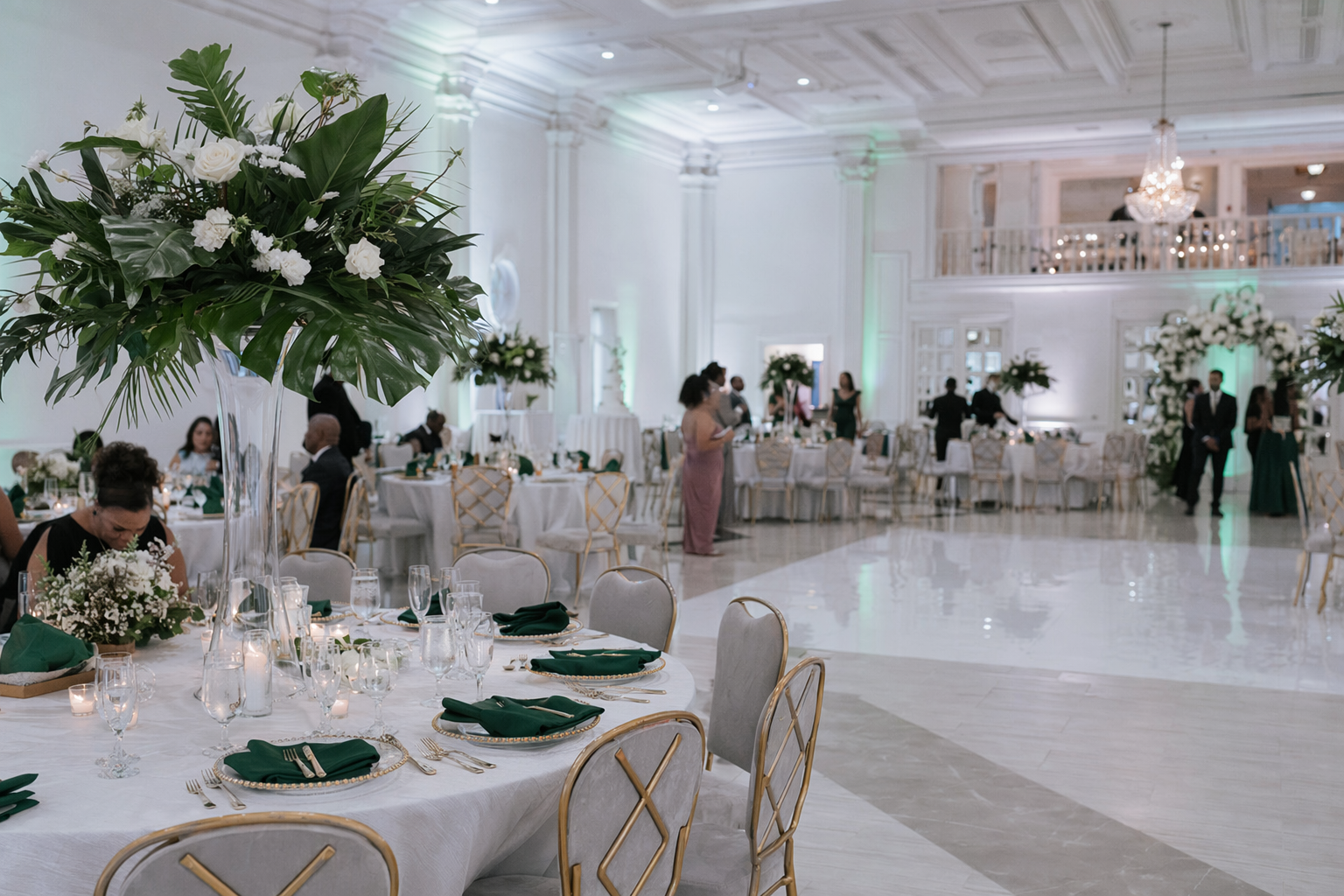
What banquet halls are good for
Banquet halls are designed for events where seating, food service, and flow matter. If you are planning a reception-style event with rounds of tables, a dance floor, a head table, speeches, or a stage, this venue type is often one of the easiest to compare.
They can be a strong fit for:
- Weddings and receptions with dinner, dancing, and formal entrances
- Quinceañeras and sweet 16s that need space for family seating, a DJ, performances, and photo moments
- Corporate events like holiday parties, awards banquets, trainings, and fundraisers
- Birthday parties, anniversaries, and reunions with buffet or plated service
- Cultural and religious celebrations that may need room for traditions, separate activity areas, or a longer event timeline
Many banquet halls are set up to simplify logistics. You may find on-site tables and chairs, a catering kitchen, parking, built-in lighting, and staff who are used to large events. Some are part of hotels or event centers. Others are standalone halls run by private owners, community organizations, or social clubs.
If your priority is scenic outdoor views or a highly customized blank space, a banquet hall may feel more traditional than industrial lofts, estates, or open-air venues. But if your priority is capacity, straightforward service, and a room built to host guests comfortably, it is often a practical place to start.
Guest count and layout: how to tell if the room really fits
Banquet halls can work for medium and large events, but the listed capacity does not always tell the full story. A hall that seats 250 for a theater-style presentation may fit far fewer once you add dining tables, a dance floor, a sweetheart table, gift table, buffet stations, photo booth, or staging.
As a starting point, many banquet halls work best for:
- 50 to 150 guests for smaller receptions and private parties
- 150 to 300 guests for many weddings, quinceañeras, and corporate banquets
- 300+ guests in larger halls, hotel ballrooms, convention-style spaces, or multi-room setups
When you tour, ask to see a sample floor plan for your event type and guest count. A wedding for 220 guests needs a different layout than a training luncheon for 220. You should also ask:
- Whether the dance floor is included in the stated capacity
- How many guests fit with round tables versus long banquet tables
- Whether there is room for a stage, DJ, live band, or ceremony setup
- If cocktail hour, kids' activities, or prayer space can happen in a separate room
- Whether the hall is fully accessible for older guests and people using mobility devices
For hosts planning from another city or country, photos can be misleading. Ask for a recent event layout, a video walk-through, and exact measurements for the main room. It is smart to confirm ceiling height, column placement, and where service doors, restrooms, and exits are located before you book.
Typical banquet hall costs and what changes the price
Banquet hall pricing varies a lot by city, season, day of week, guest count, and what is included. These ranges are examples, not quotes. The real number depends on the date, the city, the guest count, and what's included.
Common pricing models include a room rental, a per-person package, or a food-and-beverage minimum. In many markets, you may see:
- Small or simple hall rentals: about $1,500 to $5,000
- Mid-range banquet halls for receptions and parties: about $5,000 to $15,000
- Large, premium, or high-demand halls: about $15,000 to $40,000+
- Per-person packages: often around $40 to $150+ per guest, depending on menu, bar, staffing, and service level
What usually drives the price higher:
- Saturday evenings, holiday weekends, and peak wedding months
- Bigger guest counts and longer event windows
- Prime cities and close-in suburbs
- In-house catering requirements or higher menu minimums
- Premium bar packages
- Upgraded linens, chargers, chiavari chairs, lighting, staging, or AV
- Ceremony plus reception in the same venue
- Extra setup time, cleanup, security, valet, or overtime
Fees matter too. Before you compare venues, ask for the full estimated total with taxes and line items. Watch for:
- Service charges
- Food-and-beverage minimums
- Administrative or staffing fees
- Security fees
- Cake-cutting or outside dessert fees
- Corkage fees
- Overtime charges
- Deposit schedule and cancellation terms
If you are trying to build a realistic number before touring, start with your guest count and a comfortable all-in range, then use our guide on setting an event venue budget.
What is often included, and what may cost extra
One reason hosts choose banquet halls is that many come with core event infrastructure already in place. That can make planning easier, but you still need a written list of what is included in your package.
What is often included:
- Tables and banquet chairs
- Basic setup and breakdown
- Standard linens or simple table coverings
- On-site venue coordinator or banquet manager
- Built-in restrooms, parking, and climate control
- Catering prep area or full kitchen access for approved vendors
- Basic house lighting and sometimes a dance floor
What may be extra or limited:
- In-house catering or bar requirements
- Upgraded linens, chair covers, specialty chairs, chargers, or centerpieces
- AV, projector, microphones, stage, or screen
- DJ booth, lighting design, or sound technician
- Ceremony arch, backdrop, or décor installations
- Security, valet, coat check, or attendants
- Extra cleaning for confetti, candles, or cultural décor elements
- Vendor meals, cake service, or dessert plating
This is especially important for cultural and religious celebrations. If you need a long event window, a separate prayer area, room for traditional dancers, a baraat arrival, a changing suite, or permission for outside sweets and family-style service, ask early. Some halls are very flexible. Others are more package-based and strict about outside vendors, event timing, and décor rules.
You should confirm every inclusion, restriction, and fee in writing before paying a deposit.
Questions to ask before you choose a banquet hall
When you compare banquet halls, practical questions usually matter more than marketing photos. Use the tour to see how your event will actually run.
Ask these key questions:
1. How many guests does this room fit for my exact layout? Ask for a sample floor plan.
2. What is the pricing structure? Room rental, per-person package, or food-and-beverage minimum.
3. What is included in the total, and what costs extra? Get a written estimate with line items.
4. Do you require in-house catering or a preferred vendor list? If outside catering is allowed, ask about kitchen access and extra fees.
5. How long is the rental window? Include setup, vendor load-in, event time, and cleanup.
6. What happens if we go over time? Confirm overtime rates and cut-off times.
7. Is there enough parking, and is it included? Also ask about valet and bus access.
8. Are there noise limits, alcohol rules, décor restrictions, or insurance requirements?
9. What deposit is due, and what is the cancellation policy?
10. Who will be my contact on the event day?
It also helps to ask whether the venue has hosted your type of event before. A hall that regularly handles weddings may operate differently from one that mainly hosts corporate banquets or community celebrations. You are the one choosing who to book, so compare at least a few options and confirm the final terms in writing.
Get matched with banquet halls near you
If you want to save time, you can tell us your city, date, guest count, budget range, and event type, and we can help you find banquet halls that may fit. Matching is free to the host.
You can request matches for weddings, quinceañeras, corporate events, birthday parties, religious celebrations, and other gatherings. Help is available in your own language, which can be especially useful if you are planning for family from another state or another country.
After you get matched, you review the options, tour, compare packages, ask questions, and decide who to contact or book. VenueGather is not a venue, caterer, or event operator, and we do not guarantee price or availability. Venues set their own pricing, rules, and calendars.
Ready to start? Get matched and compare banquet halls near you.
Banquet halls are a practical choice for larger events with dining and dancing, but the best option depends on your guest count, city, date, budget, and exactly what is included.
Common questions
What is the difference between a banquet hall and a ballroom?
The terms overlap, and some venues use them interchangeably. In general, a ballroom may suggest a more formal event space, often in a hotel or upscale venue, while a banquet hall can be anything from a classic reception hall to a community or private event space. The better question is how the room functions for your guest count, layout, food service, and timeline.
Are banquet halls only for weddings?
No. Banquet halls are commonly used for weddings, but they also work well for quinceañeras, sweet 16s, anniversaries, corporate dinners, fundraisers, holiday parties, reunions, and many cultural or religious celebrations. They are especially useful when you need seated dining and room for a large group.
How far in advance should I book a banquet hall?
In many markets, popular dates book months in advance, especially Saturday evenings in peak season. Larger events and high-demand cities often need a longer lead time. If your date is flexible, you may find better availability on Fridays, Sundays, or off-peak months. Always confirm date holds, deadlines, and deposit terms directly with the venue in writing.
Do banquet halls usually include catering?
Some do, and some do not. Many banquet halls have in-house catering or require approved caterers. Others allow outside catering for an extra fee or with kitchen-use rules. If food traditions or specific cuisine matter to your event, ask early about outside vendors, prep access, serving style, and any extra charges.
Can I bring my own decorations, DJ, or vendors?
Sometimes, but not always. Policies vary. Some halls are flexible, while others limit candles, hanging décor, confetti, open flames, outside alcohol, or non-approved vendors. Ask for the written vendor and décor policy before you book, especially if your event includes cultural elements, live music, or custom installations.
How does free matching work on VenueGather?
You share basic event details like your city, event type, date, guest count, and budget range. We use that information to help connect you with venues that may fit your needs. Matching is free to the host. Then you compare options, ask questions, tour if you want, and confirm pricing, availability, and contract terms directly with the venue.